Beyond Yoga Poses
“If yoga practice [insert your mindful movement here, Pilates, qigong, nature walks] doesn’t make you a better person, why do it?” I once had a yoga teacher ask me this and I’ve never forgotten it. I was a gymnast through middle and high school and began yoga once that seemed too dangerous, but it was and is the mental and spiritual benefits that keep me coming back to my practice. If I am in a situation that is challenging or causes me anxiety, often I can feel my breath shorten or tighten. It is in those moments when yoga practice really shines through — remembering to return to my breath, to lengthen my breath, helps settle my nervous system so I am more likely to respond to a situation with greater clarity as opposed to a knee-jerk reaction coming from a place of fear. I am not always so aware in difficult situations, but like yoga, life is a practice. The tools yoga provides to help maintain harmony when otherwise there might be none are invaluable.
The question becomes, how do we define a “better” person? It is not someone who can perform the perfect magazine cover version of a pose. The physical benefits of yoga and feeling better in your body is a noble aspiration, no doubt, and that can be achieved without what some may label as perfection in a pose. Flexibility, strength, and balance are things anyone can practice no matter what level of ability with which you begin. When you are physically healthy, you can show up for others more fully and with empathy. They say the best gift that you can give your loved ones is your own good health. However, “better” means so much more than just physical health. The mind-body connection is real. The yogic system of the koshas, the layers or sheaths of the mind, demonstrates this. The outer-most layer is the physical body, the ‘food’ sheath, then there are layers of breath, consciousness, and intuition, until the inner-most layer, the ‘golden’ sheath or the blissful sheath. When your body is healthy, the mind penetrates these deeper layers or koshas. Each successive sheath makes the mind more magnanimous and brings perspective. We recognize that we are not alone or monolithic in the world. We recognize that other people have ideas, dreams, and feelings just like we do. We recognize that when one person suffers, in a way we all do. When one person is a little happier, in a way we all are. And that supports a deeper connection to source, to your heart.
Yogic texts abound with wisdom that is just waiting to be unlocked through practice. Mindful movement is one way to practice, and contemplation or meditation helps to understand other concepts. I think of yoga philosophy as a handbook for living well. Living well means living in harmony with those you love and even those that challenge us. Sometimes the body is the gateway, other times it is the mind, other times it is in community with like-minded souls. Patanjali offers many techniques in his Yoga Sutras, and there are other texts too, including the Bhagavad Gita, the Upanishads, and Vijnana Bhairava Tantra to name a few.
One teaching from Patanjali, Sutra 1.33, is known as the Brahma Vihara, the abode of the Divine. These are also found in Buddhist practice: maitri or metta or lovingkindness, karuna or compassion, mudita or empathetic joy, and upeksha or equanimity. T.K.V. Desikachar offers a helpful explanation of Sutra 1.33 in his book “The Heart of Yoga”:
In daily life we see people who are happier than we are, people who are less happy. Some may be doing praiseworthy things and others causing problems. Whatever may be our usual attitude toward such people and their actions, if we can be pleased with others who are happier than ourselves, compassionate towards those who are unhappy, joyful with those doing praiseworthy things, and remain undisturbed by the errors of others, our mind will be very tranquil.
It is practical advice on how to live well. Putting it into practice, however, is another story. That is why having a supportive community can be a balm and an aid.
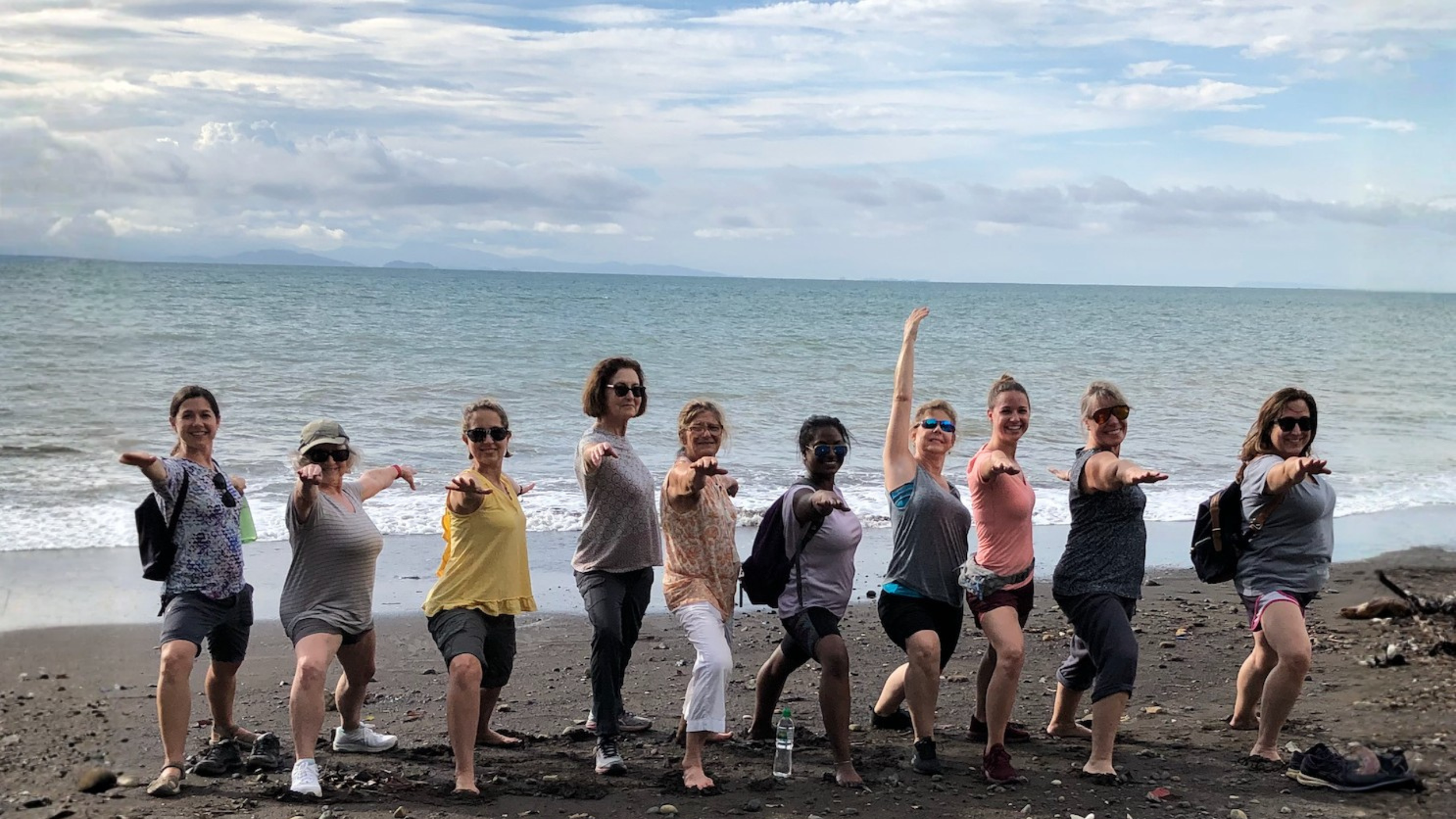
Physical health is not the only goal of yoga or mindful movement. Restoring a healthy mind-body connection; helping the practitioner get closer to their source, their raison d'être; and simply moving through life with balance and ease are all benefits of sustained yoga practice over time. The yoga practitioner gains patience, insight, and kindness. It becomes even more fun and worthwhile when we can do this in community, kula.
We all have our own ways of defining living well and being a better person. For me, it means to live in harmony with those around me, to maintain perspective during tough and uncertain times, to have the courage to stand up for what I believe in, and to share the love with others as much as possible in as many ways as possible. This is the inspiration behind Beyond the Sutras: A Deep Dive into Yoga Philosophy. In this 14 week online course, we will look at different concepts found in a variety of yogic texts, contemplate them together, practice with them together, and explore how these concepts can make life better. From the inside out. If you missed this one, check out our In-Depth-Training page for more like it.